In a Quarrel, Both Sides Are Usually at Fault. Blaming Just One of Them…
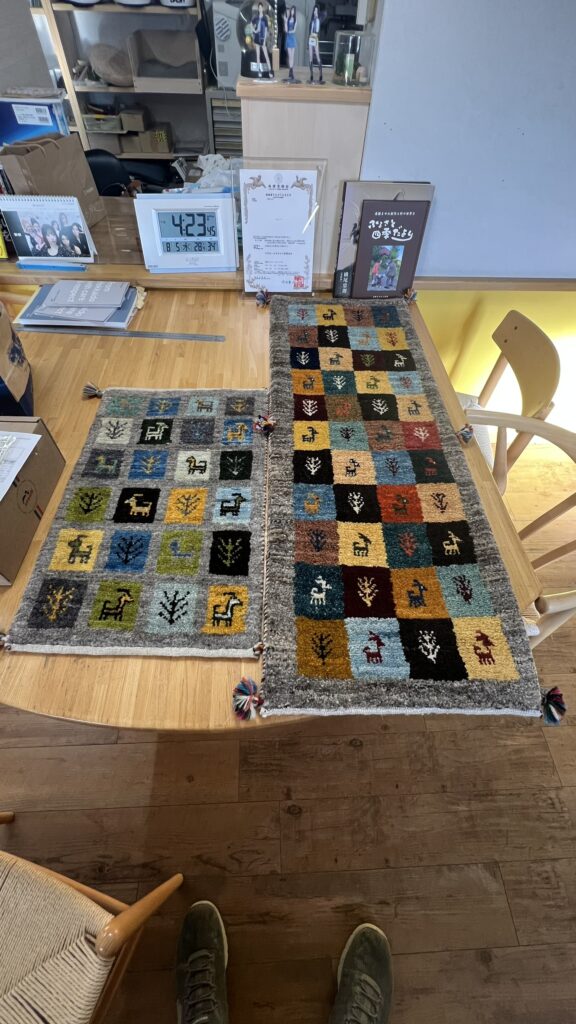
A Gabbeh, one of the Persian rugs woven in Iran. These will become the entrance mat and the kitchen mat for a big single-story house we are close to finishing, the home of the president of one of the largest real estate companies here in town.
A photograph cannot carry what the real thing feels like.
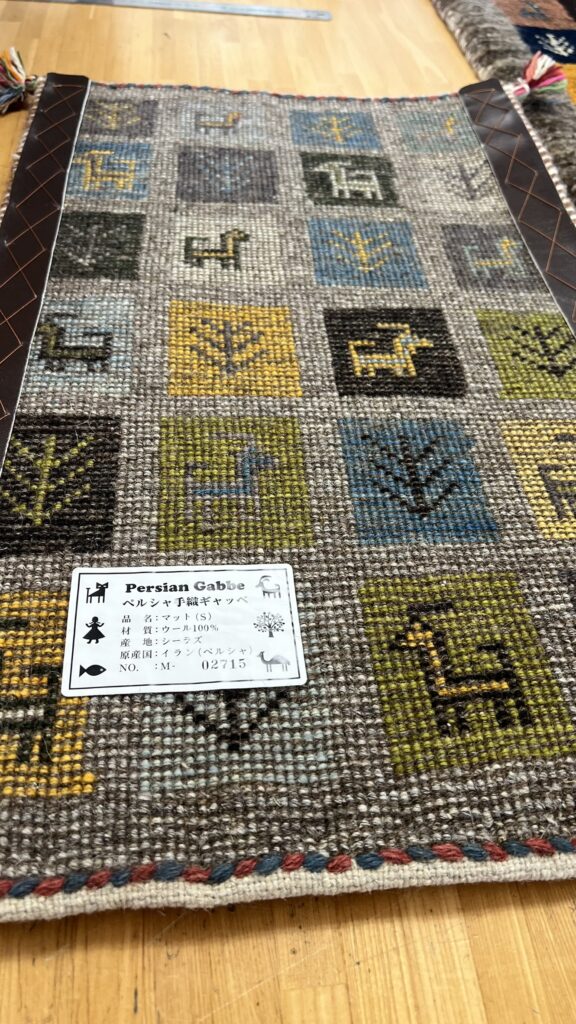
The genuine article has no separate backing cloth, so the same design comes through on the reverse, mirrored.
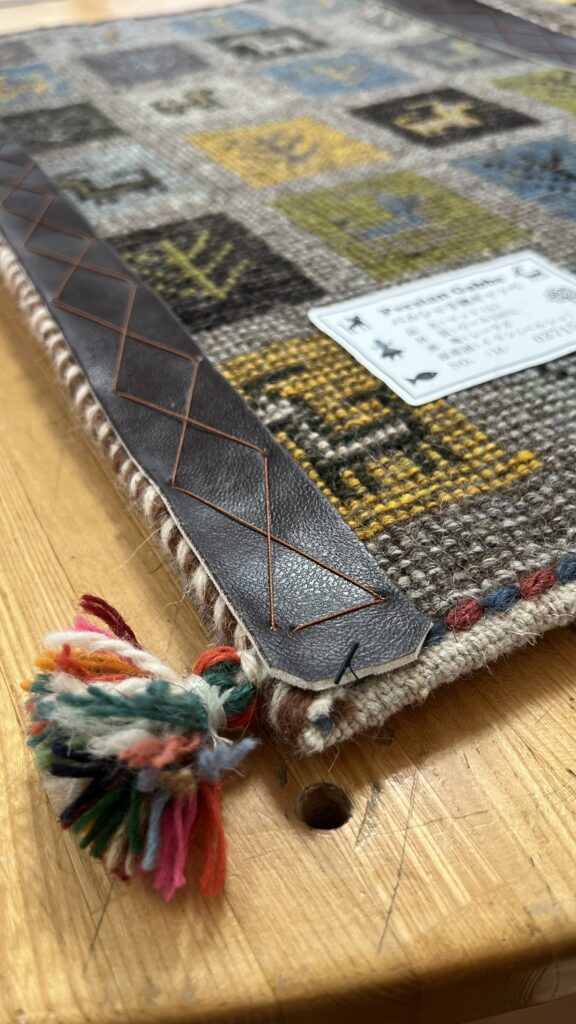
The tassels are not stuck onto the corners the way they are on a fake. They are the weaving threads themselves, gathered into bundles, which is why they look like this.
Shiraz, where these are made, is a highland city in southwestern Iran, about 700 kilometers south of Tehran and well inland from the Persian Gulf, sitting at roughly 1,500 meters. Nomadic people such as the Qashqai live in the country around it, keeping sheep and goats, and they have gone on weaving Gabbeh from that wool for generations. So the sheep, the goats, the trees and the people in a Gabbeh are not decoration. They are the landscape those weavers saw every day, and their wishes for the happiness of their families, for life, for abundance, worked into the wool.
Those wishes are going into the entrance and the kitchen of a brand-new house.
Iran is in the middle of a war right now. Sitting here in Japan, no bullets come flying at me. I watch the news and think, more or less, how long are they going to keep this up. Is the fault with America and Israel, or with the Iranian government? I did not really know, so I looked into it in my own way, and once you go back through the history, this is not a story you can settle by casting Iran alone as the villain. Look only at the reporting in front of you and you may misjudge something that matters.
Iran’s current foreign minister, Mr. Araghchi, was the ambassador to Japan at the time of the Great East Japan Earthquake. The embassy turned out in force, went around the disaster area, delivered food, and cooked hot meals for the survivors. It was, I am told, a repayment. They had not forgotten the help Japan gave when a major earthquake struck Bam, in Iran, in 2003.
Which side is good and which is evil is not something you can decide easily. Even so, hearing only one side’s case and then blaming a distant country and the people living in it is not right. The people who wove this Gabbeh are ordinary people as well, keeping sheep, wishing for the happiness of their families. If this war means a rug like this can never be had again, that too would be a real loss.
The last custom house Evohome will ever build, still under construction. The exterior wall work on the Kalsari house is finished.
It came out better than I had pictured, and I am thoroughly pleased.
This time I brought in a method I had never used before.
Over a lightweight mortar base, the Artpalle finish coat was not laid on by hand in the usual way. We mixed sands of several different grain sizes and sprayed it with a dedicated air gun.
This plain texture is inorganic, and it has a composed, upright expression quite unlike a texture a craftsman lays on with a trowel.
My own hunch, for whatever it is worth, is that the generations who build from here on will prefer this non-hand-troweled feel.
And in truth this technique is the harder of the two. Handling the spray gun is more difficult than the trowel.
On top of that, the wall corners are finished with a rounded edge, and the windows are set back behind the face of the wall and wrapped around in a curve, using a plastering technique called daki, which literally means an embrace.
It is Evohome’s first and last attempt at it, so I will never be doing it again.
If you like it, go and ask another builder.
Ohhh, this one.
First thing in a long while that has really got me. It is costing me sleep. Give it a go.