Aging, Decaying, Rotting…
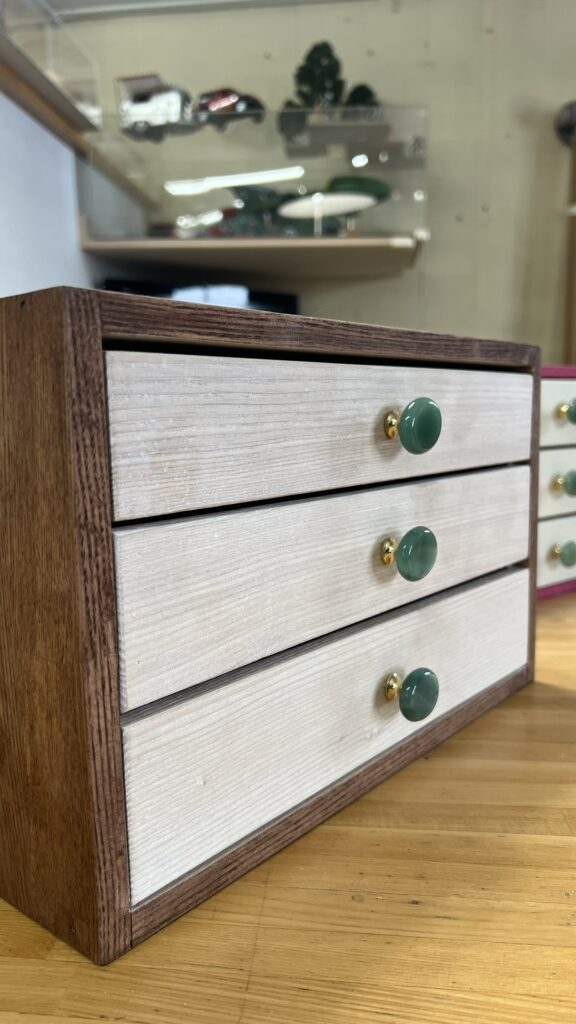
Well well, here is a mysterious small box that seems to sell out before I know it whenever I make one.
The one in the photo was made to order with a specific color.
Believe it or not, the lead time was half a year… I am so sorry..
The box itself is crafted from laminated ash (Tamo) wood, but for the drawer fronts, I used solid Hokkaido ash and stained it.
I think it turned out quite cute.
Shall I write about some serious architectural stuff for a change?
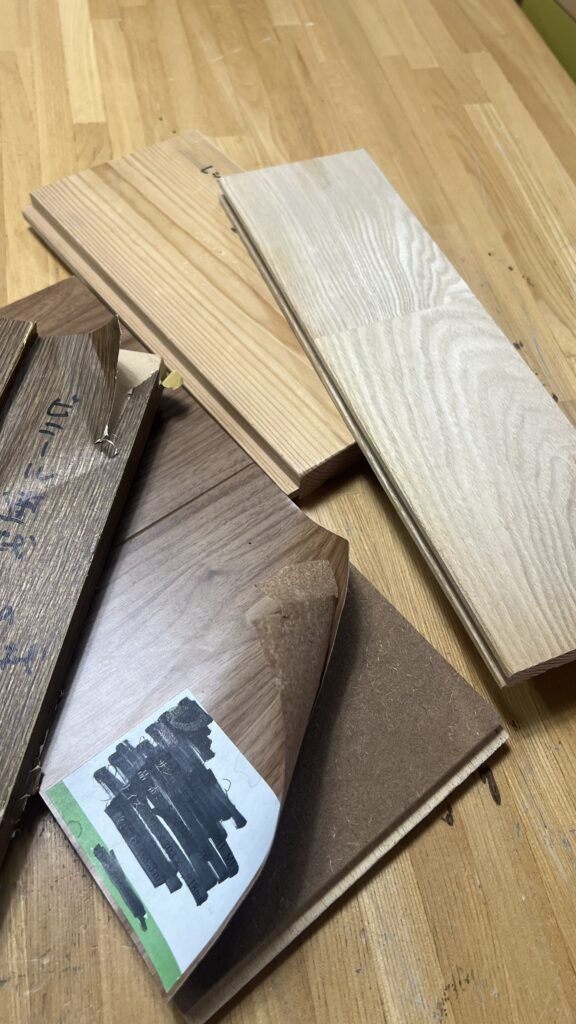
I lined up some flooring samples on my desk and took a picture. The samples in the back are solid ash and pine flooring.
The sample in the front is “sheet flooring” (vinyl laminate), which holds an overwhelming market share in new housing.
While everyone says, “No waxing needed, cleaning is a breeze, modern houses are so clean!” the floor they step on every day is mostly that “wood-grain vinyl sheet flooring” on the left.
It is made to look like wood, but the truth is, it is not wood. It is just a vinyl sticker made from petroleum, glued onto a board that has been hardened with adhesives.
Once it peels, it is over. It cannot be repaired… cannot be replaced, and obviously cannot be sanded… if you want to fix it, you have no choice but to stick another sheet on top.
It is the same logic as a cheap particle board shelf.
I think you have seen a plastic bucket left outside cracking and crumbling from UV rays.
That is exactly what happens on the floors of expensive new houses. Moreover, what comes out from under the peeled surface is a water-sensitive material made of compressed wood dust (MDF).
If this sucks up moisture, it is game over. It swells up mushy, gets moldy, smells, loses its structural integrity, and crumbles like a damp cracker. I call this “rotting.”
It goes without saying, but solid wood is “wood” from the surface all the way to the back..
If it gets scratched, you can sand it. You can recoat it. Over time, the color deepens, gains a sheen, and instead of deteriorating, it “withers” (ages gracefully). In short, it matures. The life of the residents is carved into it, and it truly gains “character.”
Naturally, if you maintain it with oil or wax, it is “overwhelmingly resistant to water.”
Sometimes “fake pros” say the opposite. “Because it’s vinyl, it’s strong against water; because it’s wood, it’s weak against water.”… The charismatic housing salesperson saying this has either been brainwashed by their company or is lying.
Synthetic building materials do not “age gracefully.” First, they “decay.” Once the adhesive and surface life end, they cannot be regenerated. The moment they decay, they can no longer refuse water, and as a result, they “rot.” That is the order.
And here is the worst part.
Synthetic materials are hard to dispose of in the end. They cannot be separated. They are hard to burn. They become industrial waste. You pay money to turn them into trash. In the end, it just means they become “troublesome garbage.”
Wood is different. In the end, it burns and becomes heat. It becomes biomass. It releases carbon dioxide when burned, but that is just returning what it absorbed while it was alive. It is just circulating.
“Easy maintenance! Easy cleaning!”
Be careful with these words.
It is easy to build a good house if you do not overuse vinyl materials.
Wood: Pillars and skeleton
Earth: Diatomaceous earth, plaster, cement
Stone: Tiles, ceramics (including toilets)
Iron: Rebar, hardware
Vinyl wallpaper, vinyl flooring, vinyl kitchens, vinyl washstands, vinyl toilets, vinyl doors, vinyl shoe boxes, vinyl…
We don’t need vinyl.
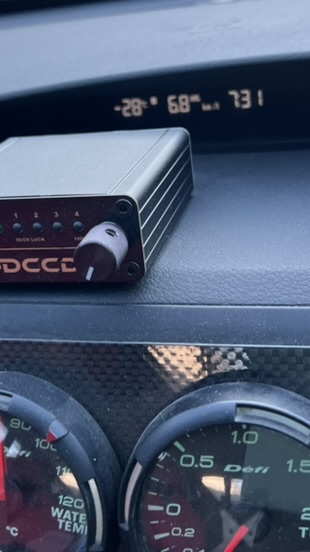
I went to Lake Nukabira for the weekend.
On Saturday, ignition trouble dropped the engine to 3 cylinders…
Returned to Kitami and finished repairs.
Woke up at 4 AM Sunday and headed to Nukabira…
Then turbo trouble turned it into just an economy car..
If you only drive it once a year or so, even a car “decays” (lol)
On top of that, the old man driving has “withered” (aged)…